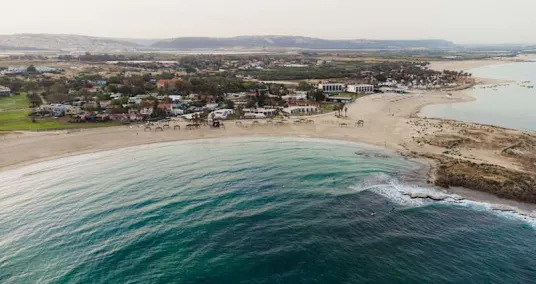
The discovery was made in an ancient shipwreck in the Dor Lagoon near the Carmel Coast, where archaeologists recovered nine pieces of unprocessed iron known as “blooms.”
Researchers from the University of Haifa said Wednesday that an underwater excavation off Israel’s northern Mediterranean coast uncovered what they described as the earliest known cargo of raw iron transported by ship, dating back around 2,600 years, Xinhua reported.
The discovery was made in an ancient shipwreck in the Dor Lagoon near the Carmel Coast, where archaeologists recovered nine pieces of unprocessed iron known as “blooms.” According to the university, the find provides direct evidence of how iron was transported in its earliest commercial stages.
The material was preserved in its original form, having solidified directly in a smelting furnace without undergoing forging or further refinement. Researchers said this distinguishes the cargo from later iron artifacts that typically show signs of shaping or tool-making.
Unlike copper and bronze, which could be melted into liquid form in ancient production processes, iron was heated with charcoal to produce a solid, porous mass. That mass was generally hammered to remove impurities and create denser material suitable for tools and implements.
The recovered blooms showed no indication of that secondary processing stage, suggesting they were transported immediately after production.

Earliest iron shipment discovered in ancient Mediterranean wreck
To determine the age and condition of the cargo, researchers conducted microscopic and chemical analyses.
Radiocarbon dating was also carried out on charred wood embedded in one of the pieces, helping confirm the timeline of the shipment. The findings were published in the journal Heritage Science.
Researchers said the cargo indicates that iron was being moved in raw form from production sites to other locations for further processing, pointing to a level of specialization in ancient manufacturing and trade networks in the Mediterranean.
The University of Haifa said the discovery provides new insight into early iron production and distribution practices in the region.
LATEST POSTS
- 1
 Which camera do you believe is great for first-time clients? !
 - 2Vaccine makers raise concerns over US panel's shift away from hepatitis B shots for newborns
- 3Old age isn’t a modern phenomenon – many people lived long enough to grow old in the olden days, too
- 4Tear gas and arrests: Iranian regime continues crackdown on protesters amid economic unrest
- 5Churches and politicians in South Sudan call for 'lasting peace' in Easter messages





- Flu cases are rising with a strain that makes older people sicker
- Iranian missile hit on Ne'ot Hovav factory leads to fear of chemical leakage
- One perk to marrying Richard Marx later in life? 'We don't have time' for stupid arguments, says Daisy Fuentes.
- Vial marked 'Polonium 210' sparks scare during German Easter egg hunt
- SpaceX launches Starlink satellites on its 150th Falcon 9 mission of the year
- 6 Fun Urban areas For Seniors To Travel
- 'War is not over': Detailed diagrams of prisons found in cells of Oct. 7 terrorists
- A definitive Bike Standoff: Decision in favor of Your Number one Ride
- Geminid meteors streak under green sky | Space photo of the day for Dec. 19, 2025