Artemis II live updates: NASA's moon mission breaks Apollo record for farthest distance humans have traveled from Earth

NASA’s Artemis II — the first crewed lunar mission in more than half a century — made history on its trip around the moon on Monday afternoon.

The four-member crew — NASA commander Reid Wiseman, pilot Victor Glover, mission specialist Christina Koch and Canadian space agency mission specialist Jeremy Hansen — surpassed the record for the farthest distance from Earth traveled by humans, set by Apollo 13 in 1970 at 248,655 statute miles.

During their 7-hour lunar flyby, the Artemis II astronauts will take photos and make observations from the Orion spacecraft, which is expected to lose contact with mission control for about 40 minutes as it passes behind the moon. The crew members will also witness a solar eclipse.

The Orion will then be officially on its way back to Earth. The 10-day mission is due to conclude on Friday, when Artemis II makes its reentry before a splashdown in the Pacific Ocean off the coast of San Diego.

Follow the latest updates on the Artemis II lunar flyby in the blog below.

Live13 updates
    • Dylan Stableford
      Dylan Stableford

      Artemis II crew breaks Apollo 13 record for the farthest distance from Earth

      The Artemis II crew members are seen moments after breaking Apollo 13's record.
      The Artemis II crew members are seen moments after breaking Apollo 13's record.
      (NASA)

      Moments after the Artemis II surpassed Apollo 13's record of 248,655 miles for the farthest distance from Earth traveled by humans, mission commander Reid Wiseman read a statement from the cabin of the Orion:

      "As we surpass the furthest distance humans have ever traveled from planet Earth, we do so in honoring the extraordinary efforts and feats of our predecessors in human space exploration. We will continue our journey even further into space before Mother Earth succeeds in pulling us back to everything that we hold dear. But we, most importantly, choose this moment to challenge this generation and the next to make sure this record is not long-lived.”

    • Kate Murphy
      Kate Murphy

      Christina Koch: 'It is awesome to see this side of the moon'

      The four astronauts aboard the Orion spacecraft concluded their pre-lunar flyby conference with Kelsey Young, the Artemis II lead scientist for lunar observations, by passing the microphone around with some final thoughts:

      “We are just fired up to get started on this day,” NASA commander Reid Wiseman told Young.

      “It is awesome to see this side of the moon,” mission specialist Christina Koch said. “You guys made us excited for this day and we couldn’t appreciate it anymore.”

      Mission specialist Jeremy Hansen of the Canadian Space Agency told Young, “It is blowing my mind what you can see with the naked eye from the moon right now. It is just unbelievable.”

    • Dylan Stableford
      Dylan Stableford

      NASA made the Artemis II crew a wake-up playlist. Here are the songs they’ve heard so far

      On Monday, the four astronauts aboard NASA's Artemis II were awoken to the sounds of "Good Morning," a song by Mandisa and TobyMac, which was played by mission control.

      It's been a tradition at NASA to play songs as wake-up calls for astronauts in space. Here's what the Artemis crew has heard so far:

    • Kate Murphy
      Kate Murphy

      Artemis II astronauts and mission science officer are having a pre-lunar flyby conference

      A pre-lunar flyby conference is currently underway between Artemis II science officer lead Kelsey Young and the four astronauts on the Orion spacecraft. Speaking from NASA’s Johnson Space Center in Houston, Young is advising on camera setup and reminding the astronauts of the 30 lunar surface targets to capture. Young will also provide them with a target timeline, which will help them monitor the time they have to capture photos and observations of each lunar surface target.

      Advertisement
      Advertisement
    • Dylan Stableford
      Dylan Stableford

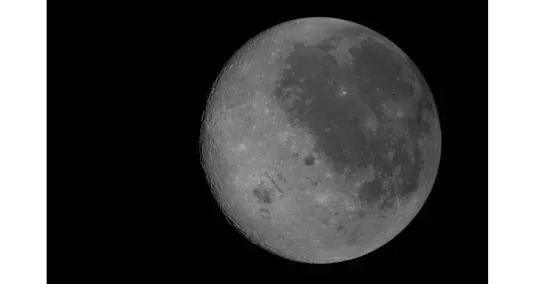
      The Orion is approaching the moon

      A view of the moon from a camera attached to the Orion space capsule.
      A view of the moon from a camera attached to the Orion space capsule.
      (NASA)

      The Artemis II crew is now just 13,000 miles away from the moon, and about half an hour from surpassing the record for the farthest humans have ever traveled from Earth. That record, 248,655 miles, was set by Apollo 13 in 1970, according to NASA.

    • Dylan Stableford
      Dylan Stableford

      How to watch today's historic lunar flyby

      Those looking to watch live coverage of today’s historic trip around the moon have numerous options. According to NASA, the following platforms will have livestreams beginning at 1 p.m. ET:

      That’s in addition to the NASA+ app and a live YouTube player, which will be embedded at the top of this page throughout the seven-hour lunar flyby.

    • Kate Murphy
      Kate Murphy

      How many different types of hot sauce are flying around the moon? A look at the Artemis II crew menu.

      There are 189 unique menu items the Artemis II astronauts have access to during their mission, according to NASA. “The food flying aboard Artemis II is designed to support crew health and performance during the mission around the Moon,” NASA said. “With no resupply, refrigeration, or late-load capability, all meals must be carefully selected to remain safe, shelf-stable, and easy to prepare and consume in NASA’s Orion spacecraft.

      The menu includes more than 10 different types of beverages, ranging from mango-peach smoothies to coffee. Some of the most common food items include barbecued beef brisket, spicy green beans, tortillas and mango salad. When it comes to condiment favorites, there are five different types of hot sauces aboard the Orion spacecraft, as well as maple syrup, chocolate spread and peanut butter, to name a few.

      “Food selections are developed in coordination with space food experts and the crew to balance calorie needs, hydration, and nutrient intake while accommodating individual crew preferences,” NASA’s website says.

    • Dylan Stableford
      Dylan Stableford

      An Apollo astronaut recorded a message for the Artemis II crew before his death

      Jim Lovell, a member of the Apollo 8 and 13 missions, recorded a special audio message for Artemis II and its crew before his death at age 97 last year.

      According to NASA, this is Lovell's message, which was delivered to the crew on Monday:

      “Hello, Artemis II! This is Apollo astronaut Jim Lovell. Welcome to my old neighborhood! When Frank Borman, Bill Anders and I orbited the moon on Apollo 8, we got humanity’s first up-close look at the moon and got a view of the home planet that inspired and united people around the world. I’m proud to pass that torch on to you — as you swing around the moon and lay the groundwork for missions to Mars … for the benefit of all. It’s a historic day, and I know how busy you’ll be. But don’t forget to enjoy the view. So, Reid, Victor, Christina and Jeremy and all the great teams supporting you — good luck and Godspeed from all of us here on the good Earth.”

      Advertisement
      Advertisement
    • Kate Murphy
      Kate Murphy

      10 days and hundreds of thousands of miles: Artemis II mission by the numbers

      The Orion spacecraft, during the Artemis II mission, en route to the moon on April 3.
      The Orion spacecraft, during the Artemis II mission, en route to the moon on April 3.
      (NASA via AP)

      NASA has shared a variety of interesting number-based facts about the Artemis II mission, including the duration and total miles traveled:

      • 10 days: The duration of the Artemis II mission, which launched on Wednesday, April 1, from NASA’s Kennedy Space Center in Florida, and is scheduled to conclude on Friday, April 10, when the astronauts will splash down in the Pacific Ocean off the coast of San Diego.

      • 4,070 miles: The closest the Orion spacecraft will be to the moon’s surface on Monday.

      • 40 minutes: The amount of time the crew inside the Orion spacecraft will not be able to communicate with mission control as they pass behind the moon.

      • 252,760 miles: The record-breaking maximum distance the astronauts will be from Earth. It’s about 4,105 miles further than Apollo 13 reached in 1970.

      • 695,081 miles: The total number of miles the Artemis II astronauts will travel, from launch to splashdown.

    • Dylan Stableford
      Dylan Stableford

      Artemis II astronauts are loving the view: 'We're a bunch of kids up here'

      Artemis II mission specialist Christina Koch peers out of one of the Orion spacecraft's main cabin windows looking back at Earth on April 2.
      Artemis II mission specialist Christina Koch peers out of one of the Orion spacecraft's main cabin windows looking back at Earth on April 2.
      (ASSOCIATED PRESS)

      The four astronauts taking part in NASA's Artemis II mission are preparing to observe and photograph the lunar surface during Monday's historic flyby. But they've already been capturing stunning images of the Earth and moon from the window of the Orion capsule.

      "The four of us have looked at the moon our entire lives, and the way we are responding to what we're seeing out the window is just like we're a bunch of kids up here," Artemis II commander Reid Wiseman told mission control late Sunday. "We cannot get enough of this. It's amazing."

      Here are some of the photos they've taken so far.

      An image of Earth taken by Artemis II commander Reid Wiseman on April 3.
      An image of Earth taken by Artemis II commander Reid Wiseman on April 3.
      (ASSOCIATED PRESS)
      Astronauts Christina Koch and Jeremy Hansen work inside the Orion on April 3.
      Astronauts Christina Koch and Jeremy Hansen work inside the Orion on April 3.
      (ASSOCIATED PRESS)
      A view of the moon taken by the Artemis II crew before going to sleep on April 5.
      A view of the moon taken by the Artemis II crew before going to sleep on April 5.
      (ASSOCIATED PRESS)
    • Dylan Stableford
      Dylan Stableford

      What NASA wants the crew to observe on the moon during the lunar flyby

      A screenshot of the Artemis II lunar science observation plan.
      A screenshot of the Artemis II lunar science observation plan.
      (NASA)

      As the Artemis II astronauts were preparing for their historic moon flyby, mission control in Houston sent the crew a final list of "lunar surface features" that NASA’s science team wants observed and photographed:

      The 30 targets include the Orientale basin, a nearly 600-mile-wide crater that straddles the moon’s near and far sides. Orientale will be fully illuminated and visible as Orion approaches the moon. This 3.8-billion-year-old crater formed when a large object struck the lunar surface and retains clear evidence of the collision, including dramatic topography in its rings. The crew will study Orientale’s features up close and from multiple angles as they pass by.

      Hertzsprung Basin is also on the crew’s list of targets. Northwest of Orientale is a nearly 400-mile crater on the moon’s far side. An older ringed basin, Hertzsprung offers a unique contrast to Orientale, because its features have been degraded by subsequent impacts. The crew will compare the topography of the two craters to gain insight into how features evolve over geologic timescales.

      The lunar observations are scheduled to begin at 2:45 p.m. ET, per NASA.

    • Kate Murphy
      Kate Murphy

      A timeline of today's lunar flyby, including when a new record will be set for the farthest humans have ever traveled from Earth

      NASA provided the following timeline of what to expect during the Artemis II lunar flyby mission on Monday:

      • 1:30 p.m. ET: NASA will host a conversation between the Artemis II crew members aboard the Orion spacecraft and the mission’s science officer at the agency’s Johnson Space Center in Houston, to review the objectives and final timeline for the flyby.

      • 1:56 p.m. ET: The Artemis II astronauts are expected to set a new record for the farthest humans have ever traveled from Earth, surpassing the previous record set by the Apollo 13 crew, who traveled 248,655 miles from Earth in 1970.

      • 2:10 p.m. ET: The crew is expected to make remarks on setting the record.

      • 2:45 p.m. ET: The seven-hour lunar observation period starts when the crew will see the near and far sides of the moon.

      • 6:44 p.m. ET: The crew is expected to temporarily lose communication with mission control as the Orion spacecraft passes behind the moon.

      • 7:02 p.m. ET: The astronauts will make their closest approach to the moon, 4,070 miles away.

      • 7:07 p.m. ET: The Artemis II crew will reach its farthest point from Earth at a maximum distance of 252,760 miles.

      • 7:25 p.m. ET: NASA is expected to regain communication with the astronauts.

      • 9:20 p.m. ET: The flyby observation period concludes, and the astronauts will start to transmit some of the lunar images to Earth. NASA will review the images overnight and speak with the crew about their experience on Tuesday.

      Advertisement
      Advertisement
    • Kate Murphy
      Kate Murphy

      The main goals of the Artemis II mission

      In this image from video provided by NASA, Artemis II astronauts, from left, Reid Wiseman, Jeremy Hansen, Christina Koch and Victor Glover gather for an interview en route to the moon.
      Artemis II astronauts, from left, Reid Wiseman, Jeremy Hansen, Christina Koch and Victor Glover en route to the moon on April 4. (NASA via AP)
      (ASSOCIATED PRESS)

      NASA’s central goal of the Artemis II lunar flyby mission is to test a crewed flight in lunar space — not to have them land on the moon. Main additional goals include:

      • The crew will need to validate the Orion spacecraft’s systems necessary to support astronauts in deep-space exploration.

      • NASA researchers will evaluate how deep space travel affects the human body, mind and behavior in order to help build future protocols to help protect astronauts on future deep space missions.

      • The crew will test Orion's handling capabilities and its Crew Survival System to protect the astronauts throughout all mission phases.

      • Study the performance of the Space Launch System rocket and the Orion space capsule at various stages of the mission, including launch, all the way to reentry to Earth.

      • The mission is a step toward long-term sustainable human lunar exploration and future missions to Mars.

    Share this article